
Kubernetes Service Mesh: Istio, Linkerd, and Anthos Comparison for Enterprise CTOs
Compare Istio, Linkerd & Anthos service meshes for enterprise Kubernetes deployments. Expert guide for CTOs evaluating kubernetes service mesh solutions.
THNKBIG Team
Engineering Insights

Kubernetes Service Mesh: Istio, Linkerd, and Anthos Comparison for Enterprise CTOs
Service meshes have moved from experimental technology to production necessity for enterprise Kubernetes deployments. As microservice architectures grow, the complexity of managing service-to-service communication, security, and observability demands a dedicated infrastructure layer.
This guide compares the three leading service mesh solutions—Istio, Linkerd, and Anthos Service Mesh—and provides practical guidance for enterprise CTOs evaluating their options.
Why Service Mesh Matters for Enterprises
The Microservices Complexity Problem
When you have five services, manual configuration works. When you have fifty, it's a nightmare. When you have hundreds, it's impossible without automation.
Service meshes solve three fundamental challenges:
- **Traffic Management**: Intelligent routing, load balancing, canary deployments, circuit breakers
- **Security**: Zero-trust networking, mTLS encryption, fine-grained access policies
- **Observability**: Distributed tracing, metrics collection, service dependency mapping (learn more in our [Kubernetes monitoring and observability guide](/kubernetes-monitoring-observability))
The Network Layer Responsibility Shift
Traditionally, networking concerns lived in application code or sidecar proxies manually configured. Service mesh centralizes this:
- Applications focus on business logic
- Infrastructure handles networking
- Policies are declarative and version-controlled
This separation accelerates development and reduces operational burden.
Istio: The Comprehensive Platform
Overview
Istio is the most feature-rich service mesh, developed by Google, IBM, and Lyft. It's the de facto standard for enterprise deployments. For full technical documentation, visit the Istio documentation.
**Key Capabilities:**
- Traffic management with fine-grained control
- Strong security with zero-trust architecture (see our [Kubernetes security best practices](/kubernetes-security-best-practices) for enterprise hardening)
- Comprehensive observability (metrics, logs, traces)
- Extensible through WebAssembly (Wasm) plugins
- Multi-cluster and multi-tenant support
Architecture
Istio uses an Envoy-based sidecar proxy architecture:
┌─────────────────────────────────────────────────────────┐
│ POD │
│ ┌──────────┐ ┌──────────┐ ┌──────────────────────┐ │
│ │ Service A │ │ Proxy │ │ Application │ │
│ │ │──│(Envoy) │ │ Business Logic │ │
│ └──────────┘ └────┬─────┘ └──────────────────────┘ │
│ │ │
└─────────────────────┼────────────────────────────────────┘
│
┌───────▼────────┐
│ Control Plane │
│ (istiod) │
│ - Config │
│ - Certs │
│ - Discovery │
└────────────────┘
**Components:**
- **Envoy Proxy**: Sidecar handling all network traffic
- **istiod**: Unified control plane for configuration and certificate management
- **Ingress Gateway**: External traffic entry point
- **Egress Gateway**: Controlled external traffic exit
Enterprise Pros
- **Battle-tested at scale**: Google, Airbnb, and major banks run Istio at massive scale
- **Rich feature set**: Every traffic management scenario covered
- **Strong ecosystem**: Extensive documentation, tooling, and community
- **Multi-cluster**: Native support for federated deployments
- **CNCF graduated**: Industry standard with vendor neutrality
Enterprise Cons
- **Resource overhead**: Control plane and sidecars consume significant CPU/memory (see our [Kubernetes cost optimization guide](/kubernetes-cost-optimization) for strategies to minimize infrastructure spend)
- **Complexity**: Steep learning curve for operations team
- **Upgrade friction**: Major version upgrades can be painful
- **Cost**: Enterprise support contracts from IBM, Solo.io add expense
When to Choose Istio
- Large-scale deployments (50+ services)
- Complex traffic management requirements (canary, A/B, blue-green)
- Multi-cluster or hybrid cloud architectures
- Strong security requirements (compliance, zero-trust)
- Teams with dedicated platform/DevOps engineers
Linkerd: The Simplicity-First Choice
Overview
Linkerd, maintained by Buoyant, takes a different philosophy: simplicity over feature breadth. It's designed to "just work" with minimal configuration. For full technical documentation, visit the Linkerd documentation.
**Key Capabilities:**
- Ultra-lightweight proxy (Rust-based)
- Automatic mTLS with zero configuration
- Simplified traffic management
- Automatic retries and timeouts
- Minimal operational overhead
Architecture
Linkerd uses a purpose-built Rust proxy called "Linkerd2-proxy":
┌─────────────────────────────────────────────────────────┐
│ POD │
│ ┌──────────┐ ┌────────────┐ ┌──────────────────────┐ │
│ │ Service A │ │ Linkerd │ │ Application │ │
│ │ │──│ Proxy │ │ Business Logic │ │
│ │ │ │ (Rust) │ │ │ │
│ └──────────┘ └─────┬──────┘ └──────────────────────┘ │
└───────────────────────┼─────────────────────────────────┘
│
┌───────▼────────┐
│ Control Plane │
│ (Go) │
│ - API Server │
│ - Destination │
│ - Identity │
└────────────────┘
**Components:**
- **Linkerd2-proxy**: Ultra-light Rust-based proxy
- **Controller**: Go-based control plane
- **Destination**: Service discovery and routing
- **Identity**: Certificate management and mTLS
Enterprise Pros
- **Minimal resource footprint**: 10-100x less overhead than Istio in some benchmarks
- **Instant adoption**: Teams productive in hours, not weeks
- **Stability**: Changes rarely break existing deployments
- **Fast startup**: Sub-second proxy initialization
- **CNCF graduated**: Strong community and vendor support
Enterprise Cons
- **Limited traffic control**: No weighted routing, traffic mirrors, or advanced features
- **Fewer integrations**: Less ecosystem tooling than Istio
- **Single-cluster focus**: Multi-cluster requires additional setup (Linkerd Fleet)
- **Less enterprise customization**: Fewer knobs to tune
When to Choose Linkerd
- Smaller deployments (< 30 services)
- Teams without dedicated service mesh expertise
- Resource-constrained environments
- prioritizing stability over advanced features
- Microservices with standard routing needs
Anthos Service Mesh: Managed Simplicity
Overview
Anthos Service Mesh (ASM) is Google's managed Istio offering. It provides Istio's capabilities without the operational overhead. For full technical documentation, visit the Google Anthos documentation.
**Key Capabilities:**
- Managed control plane (Google maintains)
- Automatic upgrades and patches
- Integrated with Google Cloud services
- UI in Google Cloud Console
- Support for on-premises and multi-cloud
Architecture
ASM runs a Google-managed control plane while maintaining Istio compatibility:
┌─────────────────────────────────────────────────────────┐
│ POD │
│ ┌──────────┐ ┌──────────┐ ┌──────────────────────┐ │
│ │ Service A │ │ Proxy │ │ Application │ │
│ │ │──│(Envoy) │ │ │ │
│ └──────────┘ └────┬─────┘ └──────────────────────┘ │
└─────────────────────┼────────────────────────────────────┘
│
┌─────────────┴─────────────┐
│ │
┌───────▼───────┐ ┌────────▼────────┐
│ Managed Mesh │ │ Anthos │
│ Infrastructure │─────────│ Control │
│ (Google) │ │ Plane │
└────────────────┘ └─────────────────┘
**Components:**
- **Managed Anthos components**: Google-operated
- **Anthos Config Management**: Policy enforcement
- **Cloud Console**: Unified visibility and operations
- **anthos.googleapis.com**: Control plane endpoint
Enterprise Pros
- **Zero operational overhead**: Google handles upgrades, scaling, and incident response
- **Consistent experience**: Same mesh across all environments
- **Integration**: Native GCP service integrations (Cloud Trace, Cloud Monitoring)
- **Support**: Direct Google support with SLA guarantees
- **Fleet management**: Single pane of glass for multi-cluster
Enterprise Cons
- **Vendor lock-in**: Tight coupling to Google Cloud / Anthos
- **Cost**: Anthos licensing adds significant expense
- **Limited flexibility**: Custom Envoy filters restricted
- **On-premises complexity**: ASM on-prem requires additional setup
When to Choose Anthos Service Mesh
- Already invested in Google Cloud
- Multi-cluster GCP deployments
- Teams without dedicated platform engineers
- Strong preference for managed services
- Enterprise requiring SLA-backed support
Feature Comparison Matrix
| Feature | Istio | Linkerd | Anthos ASM |
|---------|-------|---------|------------|
| **mTLS** | Yes | Yes (auto) | Yes |
| **L7 Routing** | Yes | Limited | Yes |
| **Canary Deployments** | Yes | No | Yes |
| **Circuit Breaking** | Yes | Yes | Yes |
| **Retries/Timeouts** | Yes | Yes | Yes |
| **Weighted Routing** | Yes | No | Yes |
| **Traffic Mirrors** | Yes | No | Yes |
| **Distributed Tracing** | Yes | Yes | Yes |
| **Metrics Collection** | Yes | Yes | Yes |
| **Multi-cluster** | Native | Via Fleet | Native |
| **Wasm Extensibility** | Yes | No | Yes |
| **Resource Overhead** | High | Low | Medium |
| **Learning Curve** | Steep | Gentle | Moderate |
| **Managed Option** | No | No | Yes |
Decision Framework for CTOs
Choose Istio If...
- You need advanced traffic management (canary, A/B, blue-green)
- Your deployment exceeds 50+ services
- You have platform engineers dedicated to infrastructure
- Multi-cluster or hybrid architectures are requirements
- Security and compliance are top priorities
Choose Linkerd If...
- Simplicity trumps feature breadth
- Your team lacks service mesh expertise
- Resource efficiency matters (edge, IoT, constrained environments)
- Standard L4/L7 routing meets your needs
- You value stability over bleeding-edge features
Choose Anthos ASM If...
- You're fully committed to Google Cloud
- Managed services align with your operational philosophy
- You lack dedicated platform engineering resources
- Multi-cluster GCP management is a pain point
- Enterprise support with SLAs is required
Implementation Considerations
Migration Strategy
Moving to service mesh requires careful planning:
- **Start non-production**: Deploy in staging first
- **Incrementally inject**: Add services one at a time
- **Monitor closely**: Watch latency and error rates
- **Enable mTLS first**: Security baseline before traffic control
- **Document policies**: Version-control all configurations
Resource Planning
Estimate resource requirements:
| Mesh | Proxy per Pod | Control Plane |
|------|---------------|---------------|
| Istio | 50-100MB RAM, 0.5-2 cores | 2-4 cores, 8GB+ RAM |
| Linkerd | 10-20MB RAM, minimal CPU | 1-2 cores, 2GB+ RAM |
| Anthos | Similar to Istio | Managed by Google |
Team Readiness
Assess your team's capabilities:
- **Istio**: Requires dedicated platform team, Envoy expertise
- **Linkerd**: General Kubernetes knowledge sufficient
- **Anthos**: Cloud-focused engineers, GCP experience helpful
Conclusion
Service mesh has matured into an essential layer for enterprise Kubernetes. The right choice depends on your scale, team capabilities, and operational philosophy.
Istio offers the most comprehensive platform for complex enterprise needs. Linkerd prioritizes simplicity and stability. Anthos Service Mesh delivers managed Istio for Google Cloud adopters.
Start with your requirements, assess your team's capacity, and remember: the best service mesh is the one your team can operate reliably.
**Evaluating service mesh options for your Kubernetes infrastructure?**
Schedule an Assessment Workshop with our team to review your architecture and create a practical implementation roadmap.
[Book Assessment Workshop](#)
Explore Our Solutions
Related Reading
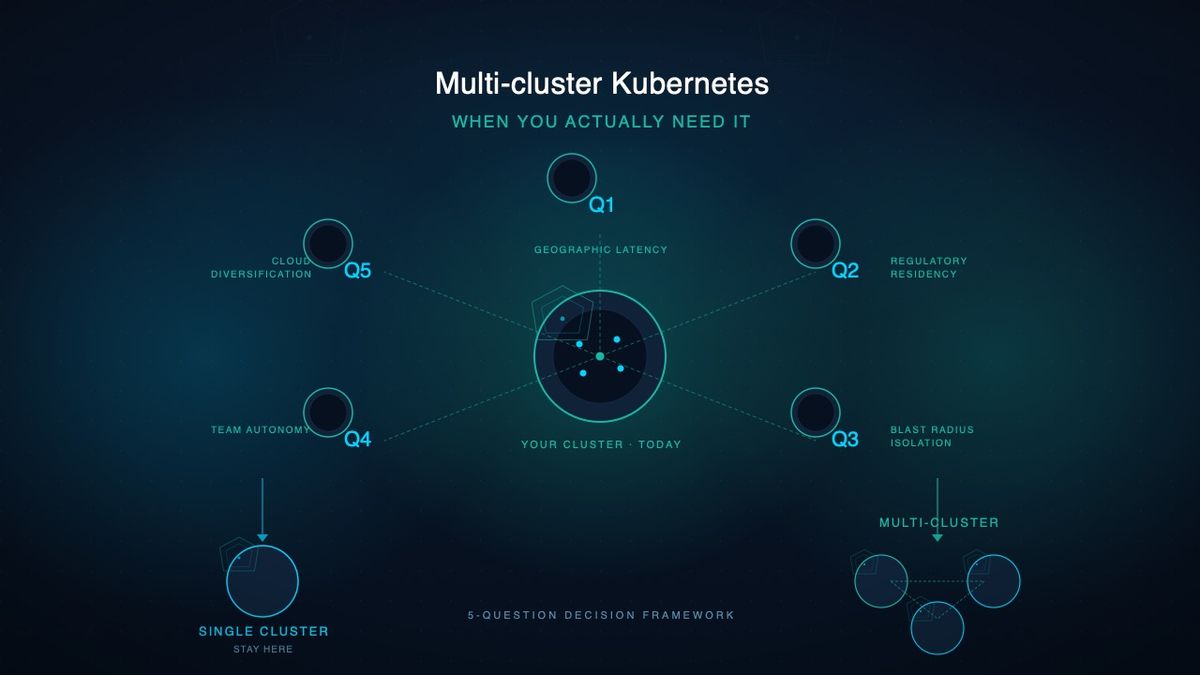
Multi-cluster Kubernetes: When You Actually Need It
Most teams don't need multi-cluster Kubernetes. Here's when you do — and the 5 operational drivers that justify the cost. Practical guide for platform teams.

Kubernetes GitOps & CI/CD Pipelines Guide
Enterprise-grade GitOps workflows and CI/CD pipelines for Kubernetes. Practical guide for CTOs on ArgoCD, Flux, and automated deployment strategies.

Kubernetes Multi-Cluster Strategy: A Practical Guide for Enterprise CTOs
Plan your kubernetes multi-cluster deployment with this enterprise guide. Covers architecture patterns, cross-cluster networking, state management, and implementation roadmap.
THNKBIG Team
Engineering Insights
Expert infrastructure engineers at THNKBIG, specializing in Kubernetes, cloud platforms, and AI/ML operations.
Ready to make AI operational?
Whether you're planning GPU infrastructure, stabilizing Kubernetes, or moving AI workloads into production — we'll assess where you are and what it takes to get there.
US-based team · All US citizens · Continental United States only