Kubernetes GitOps & CI/CD Pipelines Guide
Enterprise-grade GitOps workflows and CI/CD pipelines for Kubernetes. Practical guide for CTOs on ArgoCD, Flux, and automated deployment strategies.
THNKBIG Team
Engineering Insights

Kubernetes GitOps & CI/CD Pipelines: A Practical Guide for Enterprise CTOs
Enterprise CTOs face mounting pressure to deliver software faster without sacrificing reliability. The days of quarterly release cycles are over—modern businesses demand weekly, even daily deployments. But speed and stability don't have to be opposing forces.
GitOps and automated CI/CD pipelines transform Kubernetes deployments from high-risk events into routine operations. When done right, you can deploy to production multiple times per day with confidence.
This guide covers the essential components of enterprise-grade GitOps workflows, practical implementation strategies, and the architectural decisions that separate successful teams from those still fighting fires.
The Evolution from CI/CD to GitOps
Traditional Deployment Pain Points
Most enterprises start with manual deployments or basic scripts. As systems grow, these approaches create cascading problems:
- **Configuration drift**: Staging looks different than production
- **Deployment anxiety**: Changes require senior engineers, late nights, rollback plans
- **Knowledge silos**: Only specific people know how to deploy
- **Audit gaps**: No clear record of what changed and when
- **Environment inconsistencies**: "It worked in dev" becomes a daily mantra
GitOps solves these problems by making Git the single source of truth for infrastructure and application state.
What GitOps Actually Means
GitOps isn't just "deploying with Git." It's a methodology where:
- **Everything is declarative**: Infrastructure and applications defined as code
- **Git is authoritative**: The desired state lives in Git; systems reconcile to it
- **Changes are auditable**: Every modification has a commit history
- **Drift is detectable**: Misconfigurations are automatically identified and flagged
Tools like ArgoCD and Flux automate the reconciliation loop—constantly comparing Git state against actual cluster state and applying corrections when drift occurs.
Core Components of Enterprise CI/CD
1. Version Control Strategy
Before automation, establish a branching and versioning strategy that scales:
main (production)
└── release/* (staging/pre-production)
└── feature/* (development)
Each environment maps to a branch or directory structure:
- `infrastructure/base/` — Cluster definitions, namespaces, RBAC
- `applications/` — Application manifests per service
- `environments/prod/` — Production-specific overrides
- `environments/staging/` — Staging configurations
Keep manifests DRY (Don't Repeat Yourself) with Kustomize overlays or Helm values.
2. Container Image Strategy
Enterprise container pipelines require:
**Image Naming Convention:**
registry.company.com/{service}:{git-sha}
registry.company.com/{service}:{semver}-release
**Image Scanning Gates:**
- Block critical CVEs in base images
- Enforce signed images with Cosign or similar
- Store SBOMs (Software Bills of Materials) for compliance
**Registry Architecture:**
- Internal registry for proprietary images
- Pull-through cache for external images (,减少外部依赖)
- Geo-replicated registries for multi-region deployments
3. Build Automation
Modern Kubernetes builds use multi-stage Dockerfiles:
# Build stage
FROM golang:1.22 AS builder
WORKDIR /app
COPY . .
RUN CGO_ENABLED=0 go build -ldflags="-s -w" -o service
# Runtime stage
FROM scratch
COPY --from=builder /app/service /service
COPY --from=builder /app/config /config
EXPOSE 8080
ENTRYPOINT ["/service"]
Multi-stage builds reduce image size by 90%+ and eliminate build tools from production images.
GitOps Tools: ArgoCD vs Flux
ArgoCD Overview
ArgoCD is a declarative, GitOps continuous delivery tool for Kubernetes. It offers:
- **Web UI**: Visual deployment status, history, and health
- **Application CRD**: GitOps-native application definitions
- **Multi-cluster support**: Manage multiple clusters from single instance
- **Rollback capabilities**: One-click revert to any previous state
- **Rich integrations**: Works with Kustomize, Helm, Jsonnet
**ArgoCD Application Example:**
apiVersion: argoproj.io/v1alpha1
kind: Application
metadata:
name: payments-service
namespace: argocd
spec:
project: production
source:
repoURL: https://github.com/company/k8s-manifests
targetRevision: main
path: applications/payments-service
destination:
server: https://kubernetes.default.svc
namespace: payments
syncPolicy:
automated:
prune: true
selfHeal: true
Flux Overview
Flux takes a Git-native approach, embedding reconciliation logic directly into cluster components. Benefits include:
- **Kubernetes-native**: Uses Custom Resources exclusively
- **Smaller footprint**: Less resource overhead than ArgoCD
- **Progressive delivery**: Native support for Flagger (canary deployments)
- **Terraform integration**: Reconciles Terraform state alongside Kubernetes
**Flux Kustomization Example:**
apiVersion: kustomize.toolkit.fluxcd.io/v1
kind: Kustomization
metadata:
name: payments-service
namespace: flux-system
spec:
interval: 10m0s
path: ./deploy/production
prune: true
sourceRef:
kind: GitRepository
name: k8s-manifests
Choosing Between ArgoCD and Flux
| Criteria | ArgoCD | Flux |
|----------|--------|------|
| UI Requirements | Built-in web UI | External tools needed |
| Team Size | Larger teams benefit from UI | Smaller, CLI-focused teams |
| Multi-cluster | Native support | Requires Fleet or external tooling |
| Learning Curve | Steeper (more concepts) | More Kubernetes-native |
| Resource Usage | Higher (web server, Redis) | Lower |
For most enterprise CTOs, ArgoCD's UI justifies the additional resources—deployment visibility reduces cognitive load and speeds up incident response.
Pipeline Architecture Patterns
Pattern 1: Centralized Deployment Platform
All teams deploy through a central CI/CD platform managed by a platform engineering team.
**Pros:**
- Consistent security scanning
- Unified observability
- Shared infrastructure costs
- Easier compliance audits
**Cons:**
- Platform team becomes bottleneck
- Slows down feature teams
- Single point of failure
Best for: Regulated industries, teams early in GitOps journey
Pattern 2: Paved Road / Golden Path
Platform team provides templates and self-service tools; teams own their pipelines.
**Pros:**
- Teams move fast with guardrails
- Standardization without bottleneck
- Shared best practices
**Cons:**
- Template maintenance overhead
- Teams may resist constraints
Best for: Mid-size organizations with strong platform teams
Pattern 3: Federated with Guardrails
Full autonomy with automated policy enforcement.
**Pros:**
- Maximum team velocity
- Innovation friendly
- Teams choose their tools
**Cons:**
- Inconsistent practices
- Harder to debug cross-team issues
Best for: Large organizations with mature DevOps culture
Security Considerations
Secrets Management
Never commit secrets to Git. Use external secrets operators:
**External Secrets Operator (ESO):**
apiVersion: external-secrets.io/v1beta1
kind: ExternalSecret
metadata:
name: database-credentials
spec:
refreshInterval: 1h
secretStoreRef:
name: vault-backend
kind: ClusterSecretStore
target:
name: database-credentials
data:
- secretKey: password
remoteRef:
key: production/database
property: password
ESO syncs secrets from Vault, AWS Secrets Manager, or Azure Key Vault into Kubernetes secrets.
RBAC and Access Control
Limit deployment permissions by environment:
# Developers can only affect the staging namespace
subjects:
- kind: ServiceAccount
name: developer-bot
namespace: ci-cd
roleRef:
kind: ClusterRole
name: staging-deployer
---
# Production requires additional approval workflow
# (enforced via Git branch protection + ArgoCD sync waves)
Supply Chain Security
Implement SLSA (Supply-chain Levels for Software Artifacts):
- **Build isolation**: Containers built in ephemeral environments
- **Provenance generation**: Cryptographic attestation of build process
- **Hermetic builds**: No external network calls during build
- **Signed artifacts**: All images signed and verified pre-deployment
Tools like Tekton Chains automate SLSA compliance for Kubernetes pipelines.
Measuring CI/CD Success
Track these metrics to assess pipeline health:
Deployment Frequency
How often do you deploy to production?
| Maturity Level | Deployment Frequency |
|----------------|---------------------|
| Low | Monthly or less |
| Medium | Weekly |
| High | Daily |
| Elite | Multiple times per day |
Lead Time for Changes
Time from commit to production deployment.
- **Target:** < 1 hour for most changes
- **Elite:** < 15 minutes
Change Failure Rate
What percentage of deployments cause failures?
- **Target:** < 15% (industry average for mature teams)
- **Elite:** < 5%
Mean Time to Recovery (MTTR)
How quickly do you recover from incidents?
- **Target:** < 1 hour
- **Elite:** < 30 minutes
Implementation Roadmap
Phase 1: Foundation (Weeks 1-4)
- Set up Git repository structure
- Implement container image scanning
- Deploy ArgoCD or Flux
- Create first automated pipeline
Phase 2: Expansion (Weeks 5-8)
- Migrate existing applications to GitOps
- Implement secrets management
- Add automated testing gates
- Establish rollback procedures
Phase 3: Maturity (Weeks 9-12)
- Canary/blue-green deployments
- Policy enforcement (OPA/Gatekeeper)
- Multi-cluster coordination
- Full observability integration
Common Pitfalls
Pitfall 1: Over-Automated Without Testing
Automation without proper testing amplifies bugs. Gate deployments with:
- Unit tests
- Integration tests
- Contract tests (service-to-service)
- Performance tests (pre-production)
Pitfall 2: Monolithic Repositories
Start with monorepos for simplicity, but watch for:
- Merge conflicts across teams
- Slow CI due to large test suites
- Difficult access control
Split into domain-specific repositories when teams exceed 10-15 engineers.
Pitfall 3: Ignoring Drift Detection
Not all drift is bad, but untracked drift creates incidents. Configure alerts for:
- Manual changes outside Git
- Resource quota violations
- Unexpected scaling events
Pitfall 4: Missing Rollback Procedures
Automate rollback, but test it regularly:
# Example ArgoCD rollback
argocd app rollback payments-service --revision 42
Run quarterly rollback drills—treating incidents as training opportunities.
Conclusion
GitOps and automated CI/CD pipelines aren't luxuries—they're competitive necessities. CTOs who invest in deployment automation see faster feature delivery, reduced incidents, and happier engineering teams.
Start with ArgoCD or Flux, establish Git as your source of truth, and build toward continuous delivery. The path is clear; the tools are mature. The only remaining question is when you'll begin.
---
**Ready to transform your Kubernetes deployments?**
Schedule an Assessment Workshop with our team to evaluate your current pipeline maturity and create a roadmap for GitOps adoption.
[Book Assessment Workshop](#)
Explore Our Solutions
Related Reading
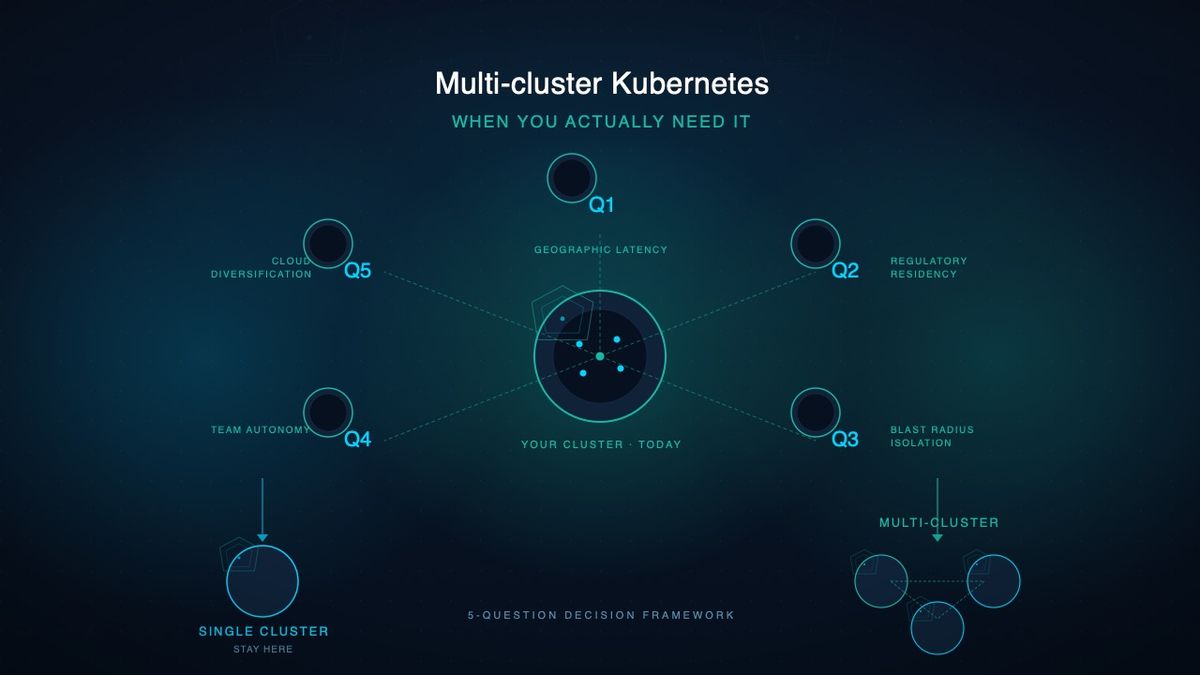
Multi-cluster Kubernetes: When You Actually Need It
Most teams don't need multi-cluster Kubernetes. Here's when you do — and the 5 operational drivers that justify the cost. Practical guide for platform teams.

Kubernetes Multi-Cluster Strategy: A Practical Guide for Enterprise CTOs
Plan your kubernetes multi-cluster deployment with this enterprise guide. Covers architecture patterns, cross-cluster networking, state management, and implementation roadmap.

Kubernetes HIPAA Compliance in 2026: A Practical Guide for Healthcare CTOs
Kubernetes HIPAA compliance in 2026: HHS OCR enforcement trends, technical controls, audit-ready architecture patterns. A practical guide for healthcare CTOs.
THNKBIG Team
Engineering Insights
Expert infrastructure engineers at THNKBIG, specializing in Kubernetes, cloud platforms, and AI/ML operations.
Ready to make AI operational?
Whether you're planning GPU infrastructure, stabilizing Kubernetes, or moving AI workloads into production — we'll assess where you are and what it takes to get there.
US-based team · All US citizens · Continental United States only