
Cloud Native and Kubernetes in Agriculture: The Future of Farming
Explore how farms and agribusinesses use Kubernetes and cloud native tech to optimize irrigation, automate equipment, and boost yields with real-time data.
THNKBIG Team
Engineering Insights
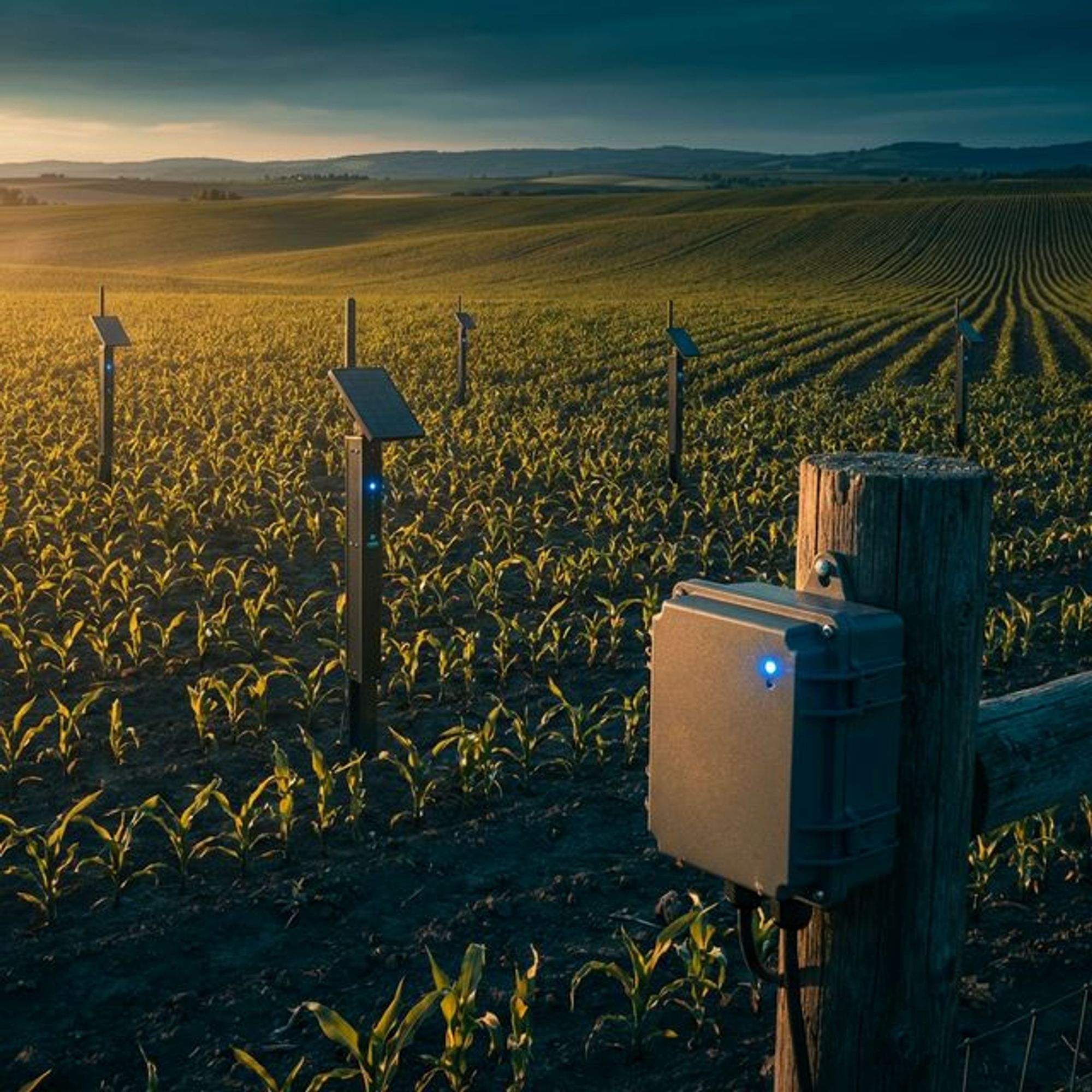
While the rest of the Tech industry was enjoying record profits and subsequently laying off 10 percent of its workforce to prop up share prices, Farmers and the agricultural industry were hard at work prepping for our future and combating food insecurity.
What is Digital Farming?
You may be asking yourself, what is AGtech or digital farming? Well, I’m glad you ask intelligent questions; let me tell you that the agricultural industry is undergoing a digital transformation, incorporating new technologies and digital solutions to improve efficiency, productivity, and sustainability. One of the key technologies driving this transformation is cloud native and Kubernetes, enabling farmers and agribusinesses to build and deploy applications that can improve their operations and provide new customer services. In this article, we will explore how cloud native and Kubernetes are being adopted in the agricultural industry and how they drive the development of Agriculture 4.0.
It doesn’t matter what you call it, but many names know it; Digital Farming, Digital Agronomy, Digital Agriculture, Smart Farming, Climate Smart Agriculture, Ag-Tech, and AgroTech all of those names refer to one thing and one thing only Agriculture 4.0
Pivotol points in Agricultural history
Agriculture 1.0 refers to the traditional agricultural era, mainly relying on manpower and animal forces.
Agriculture 2.0 significantly increased the efficiency and productivity of farming. This substantial improvement brought harmful consequences: field chemical contaminations, destruction of the ecological environment, excessive consumption of powers, and waste of natural resources.
Agriculture 3.0 emerged from the rapid development of computing and electronics. Computer programs and robotic techniques allowed agricultural machineries to perform operations efficiently and intelligently.
The farming revolution is here, combining the best methods of Agriculture, Science, Sci-Fi, and Tech with the end goal of driving down costs, tracking and eliminating waste, increased innovation, all while bringing the best products to the table, no pun intended.
What is Cloud Native and Kubernetes?
Cloud Native refers to using open source cloud computing technologies and practices to build and deploy applications. These technologies could literally include anything listed and not listed on the CNCF’s landscape. Applications like Prometheus and Grafana for observability. Harbor for secure container registry and an Envoy based service mesh for edge networking and communication. GitHub and Gitlab for code repository and cicd. Terraform and Pulumi to describe, scale, and keep the infrastructure as code and automate as needed. These cloud native applications enable organizations to improve efficiency, agility, and reliability by leveraging the cloud's scalability, security, and automation.
Kubernetes, on the other hand, is an open-source container orchestration platform that enables organizations to manage and scale containerized applications. It provides powerful tools for deploying, scaling, and managing containerized applications, making it a popular choice for organizations who want to Google like power to manage containers and underpin their cloud native architecture.
What is the Impact of Technology on Agriculture?
If we went over all the benefits this article would be a series that spans a couple of months and cover everything from Decision Support Systems (DSS), Internet of Things(IoT) sensors, and Automation to, Blockchain, Computer Vision, and Artificial Intelligence (AI).. so we’ll keep it brief. One of the main benefits of cloud native and Kubernetes in agriculture is their ability to improve efficiency, transparency, profitability, equity, and productivity. By using cloud native solutions, farmers and agribusinesses can automate many operations, such as data collection, analysis, and management. This can help them to make better decisions and improve their overall performance. Additionally, Kubernetes enables organizations to easily scale and manage their applications, which is particularly useful in the agricultural industry where there are often seasonal fluctuations in demand.
Another benefit of cloud native and Kubernetes in agriculture is their ability to provide new services and products to customers. For example, farmers can use cloud native solutions to collect and analyze data from sensors and drones to provide precision agriculture services to their customers. This can help them to improve crop yields, reduce costs, and increase the overall sustainability of their operations. Additionally, agribusinesses can use Kubernetes to build and deploy new applications and services, such as online marketplaces, which can help them to connect with customers and improve their overall sales.
Challenges of Cloud Native and Kubernetes Adoption in Agriculture
While cloud native and Kubernetes offer many benefits to the agricultural industry, there are also challenges associated with their adoption. One of the main challenges is a lack of understanding and expertise in these technologies among farmers and agribusinesses. This can make it difficult for them to fully leverage the benefits of cloud native and Kubernetes, and can also make it challenging for them to implement these technologies in their operations.
That’s where tools like Rafay and Kubecost come to play. Rafay Systems and Kubecost offer a powerful combination of tools for managing Kubernetes and cloud native technologies in the context of Agriculture 4.0.
Rafay Systems provides a comprehensive platform for automating the deployment, scaling, and management of containerized applications, making it easier for agricultural organizations to improve efficiency and agility. Its unique features and capabilities help agricultural organizations stay ahead of the competition by automating the entire Kubernetes life cycle. Moreover, its advanced monitoring and control capabilities enable organizations to keep track of their applications and troubleshoot any issues quickly and efficiently.
Kubecost, on the other hand, offers cost management solutions for Kubernetes clusters, giving agricultural organizations the visibility and control they need to optimize their cloud costs. Together, these solutions can help agricultural organizations streamline their operations, improve efficiency, and reduce costs, ultimately driving greater success in the highly competitive and rapidly evolving field of Agriculture 4.0.
Another challenge associated with cloud native and Kubernetes adoption in agriculture is the lack of infrastructure and connectivity in rural areas. Many farmers and agribusinesses are located in remote areas with limited access to high-speed internet and other digital infrastructure. This can make it difficult for them to fully leverage the benefits of cloud native and Kubernetes, and can also make it challenging for them to implement these technologies in their operations.
However, the situation is improving with the advent of satellite-based internet services such as Starlink, OneWeb, and Amazon Kuiper. These companies and more are working to solve this problem by launching low Earth orbit satellites, such as those used in the US Military's Hybrid Space Architecture Project, to provide high-speed internet access to remote areas. With solutions like low Earth orbit and increased access to broadband, farmers and agribusinesses in remote areas can fully leverage cloud native and Kubernetes in their operations.
What is the Future of Farming?
No matter your location, whether North, South, Central America, or Africa, if you're a farmer or agribusiness looking to improve efficiency, productivity, and sustainability, then cloud native and Kubernetes are a must-have for your operations. But we know that adopting these technologies comes with its own set of challenges.
That's why partnering with ThnkBIG, a Rafay Systems and Kubecost partner, is the best choice for you. We offer the best pricing for both and our Kubernetes, DevOps, and Service Mesh consulting services are top-notch. So, don't wait any longer; book a call with us today and let us help you fully leverage the benefits of cloud native and Kubernetes and drive the development of the agricultural industry.
Thank you for taking the time to read this blog post. We hope you found it informative and helpful, please share it on Twitter or LinkedIn.
ThnkBIG Technologies is a leading US-based professional services and consulting company specializing in the latest advancements in cloud native technologies, including Kubernetes Consulting.
We are dedicated to providing cutting-edge solutions, adoption, and Day 2 operations to startups and enterprises, helping them navigate the adoption process and ensuring successful long-term operations.
Our expertise and industry knowledge make us the perfect choice for organizations looking for a secure and cost-effective alternative to hiring in-house or going offshore or nearshore. Our team is committed to ensuring the highest level of security for your data and applications.
If you're interested in exploring how to implement Kubernetes within your organization or optimize its performance, ThnkBIG is here to help. Book a call today to learn more about our services and how we can help you stay ahead of the competition.
[Image: https://cdn.prod.website-files.com/67c080ecfe6b8d04e72c059b/692b8979630ac23f41374819_smart-farming.jpeg]
[Image: https://cdn.prod.website-files.com/67c080ecfe6b8d04e72c059b/692b8979630ac23f41374815_agri-history.jpeg]
Agriculture 4.0 — or digital farming — applies cloud-native technologies, data science, and automation to modern agricultural operations. Just as mechanization and GPS transformed earlier eras of farming, today’s shift is driven by IoT sensors, real-time data pipelines, AI, and Kubernetes-orchestrated workloads.
From Traditional Farming to Agriculture 4.0
Agriculture has evolved alongside industrial revolutions:
- Agriculture 1.0 – Manual labor and animal power
- Agriculture 2.0 – Mechanization (tractors, fertilizers, pesticides) increased yields but introduced ecological costs
- Agriculture 3.0 – Computers and GPS-guided equipment enabled precision positioning and more efficient machinery
- Agriculture 4.0 – Cloud-connected sensors, AI-driven decision support, real-time data processing, and Kubernetes-based platforms
Digital farming (also called smart farming, AgTech, AgroTech, or digital agronomy) brings predictive modeling, sustainability tracking, and autonomous systems to farms of all sizes — from family farms to global agribusinesses.
Why Cloud Native Matters in Agriculture
Modern farms generate massive, continuous data streams:
- Soil and moisture sensors
- On-farm weather stations
- Drone and satellite imagery
- Equipment telemetry (tractors, combines, irrigation systems)
- Market and commodity pricing feeds
Processing this data in real time and turning it into actionable decisions requires scalable, resilient infrastructure — the same kind used by modern software companies.
Key cloud-native tools for agricultural operations include:
- Prometheus + Grafana – Observability and dashboards for equipment telemetry, sensor health, and operational KPIs
- Apache Kafka / NATS – Event streaming backbones for ingesting and routing sensor and telemetry data
- Kubernetes – Orchestration for containerized applications handling data processing, ML inference, APIs, and customer-facing portals
- Terraform / Pulumi – Infrastructure as code for consistent, multi-region, multi-environment deployments
- Harbor – Secure container registry for managing and scanning application images
- Argo Workflows – Orchestration of scheduled and event-driven data pipelines (e.g., crop analytics, imagery processing)
Benefits of Cloud Native & Kubernetes for Farming
1. Efficiency and Automation
Cloud-native platforms automate data collection and response:
- Soil moisture thresholds can automatically trigger irrigation
- Drone-detected crop anomalies can generate work orders without manual review
- Telemetry-driven maintenance can reduce equipment downtime
2. Precision Agriculture
By combining sensor data, imagery, and models, farmers can apply water, fertilizer, and pesticides precisely where needed. This:
- Lowers input costs
- Reduces environmental impact
- Improves yields and consistency
3. Seasonal Scalability
Agricultural workloads are highly seasonal. Kubernetes clusters can:
- Scale up during planting or harvest when analytics and decision support are most intensive
- Scale down during off-peak periods to control costs
This elasticity is difficult to achieve with fixed on-premises infrastructure.
4. New Digital Services
Agribusinesses can build and operate:
- Precision advisory platforms for growers
- Online marketplaces and logistics portals
- Commodity trading and risk management systems
These services require the same reliability, availability, and performance guarantees as any enterprise SaaS product — a natural fit for cloud-native architectures.
Challenges in Adopting Cloud Native in Agriculture
1. Expertise Gap
Most agricultural organizations do not have dedicated platform engineering teams. Standing up, securing, and operating Kubernetes at scale is non-trivial and often requires:
- Building in-house expertise (time- and cost-intensive), or
- Partnering with specialists who provide managed or co-managed platforms
2. Rural Connectivity Constraints
Many farms operate in regions with limited or unreliable broadband. Two key approaches help:
- Edge computing – Running Kubernetes clusters or lightweight edge nodes on-farm, with intermittent synchronization to the cloud
- LEO satellite internet – Services like Starlink and (emerging) Amazon Kuiper are expanding viable connectivity options for remote operations
3. Data Sovereignty and Privacy
Agricultural data can be highly sensitive:
- Field boundaries and GPS coordinates
- Soil profiles and yield maps
- Operational practices and input usage
Cloud-native architectures must address:
- Where data is stored (regions, providers)
- Who can access which datasets
- How data flows between on-farm systems, edge nodes, and cloud services
Tools That Bridge the Gap
Rafay Systems
Rafay provides a platform for automating the full lifecycle of Kubernetes clusters:
- Provisioning and upgrades
- Policy management and security
- Multi-cluster, multi-cloud operations
For agricultural organizations without large platform teams, Rafay’s managed fleet management significantly reduces operational complexity and risk.
Kubecost
Kubecost delivers granular cost visibility for Kubernetes workloads:
- Breaks down spend by cluster, namespace, application, or team
- Helps identify expensive workloads (e.g., AI inference, imagery processing, streaming analytics)
- Enables budget control and optimization for seasonal and experimental workloads
The Future of Farming Is Cloud Native
Whether you’re running a regional agribusiness, a network of vertical farms, or a global supply chain, your infrastructure challenges increasingly resemble those of any data-intensive enterprise:
- Real-time data processing at scale
- Seasonal elasticity and burst capacity
- High availability and operational resilience
- Transparent cost management
Cloud-native technologies and Kubernetes provide the foundational platform. The differentiator is access to the right expertise and tooling to implement them correctly and sustainably.
Key Takeaways
- Agriculture 4.0 applies cloud-native technologies — Kubernetes, event streaming, and ML inference — to real-time agricultural decision making.
- Benefits include elasticity for seasonal workloads, precision agriculture, and automation of data collection, analysis, and response.
- Connectivity challenges in rural areas are being mitigated by edge computing and LEO satellite internet.
- Managed Kubernetes platforms (Rafay) and cost visibility tools (Kubecost) make cloud-native adoption feasible for agricultural organizations without large platform engineering teams.
THNKBIG is a Rafay Systems and Kubecost partner providing Kubernetes consulting and cloud-native architecture services. Contact us to explore how cloud-native infrastructure can improve efficiency, resilience, and sustainability in your agricultural operations.
Explore Our Solutions
Related Reading

What is Backstage? Spotify's Open-Source Platform
Demystifying Red Hat OpenShift: What Is It?
Understand what Red Hat OpenShift adds to Kubernetes, how it compares to vanilla K8s, and whether it's the right enterprise platform for your organization.

Crossplane: A Game-Changer for Midmarket Companies
THNKBIG Team
Engineering Insights
Expert infrastructure engineers at THNKBIG, specializing in Kubernetes, cloud platforms, and AI/ML operations.
Ready to make AI operational?
Whether you're planning GPU infrastructure, stabilizing Kubernetes, or moving AI workloads into production — we'll assess where you are and what it takes to get there.
US-based team · All US citizens · Continental United States only